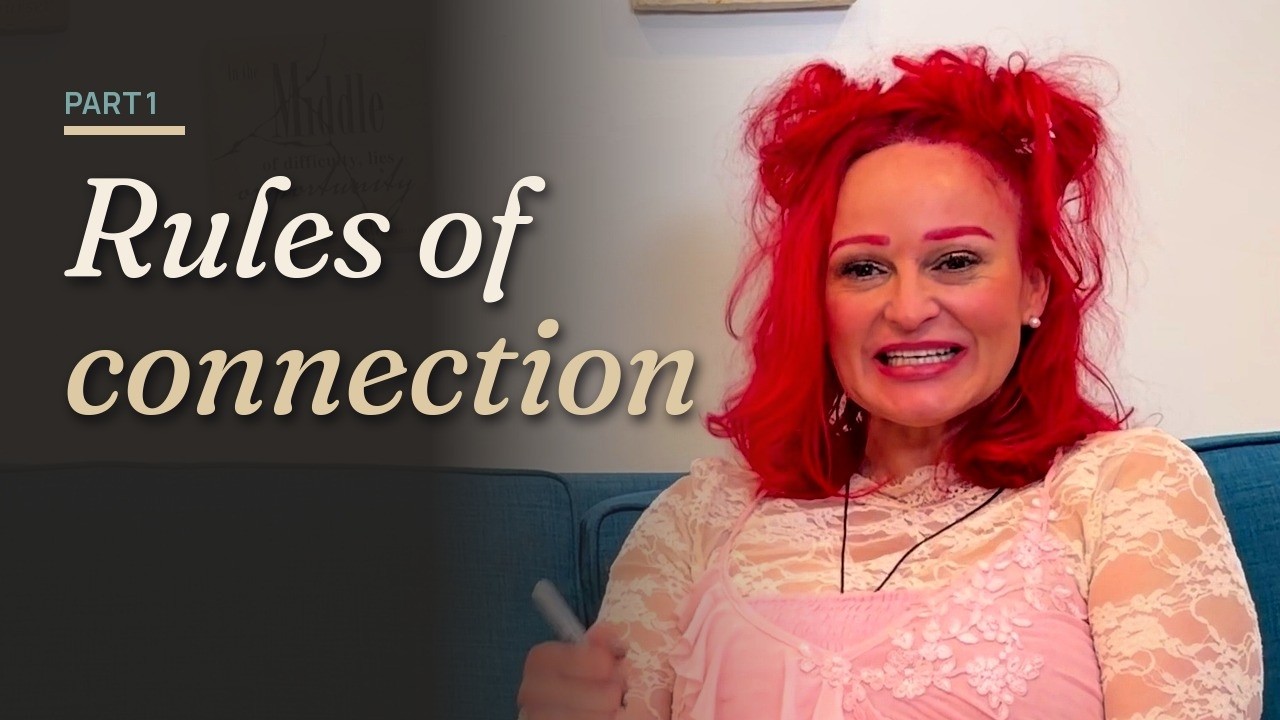
Rules of Connection (Part 1): How to Argue Without Hurting
Prefer to watch? Episode 6 on YouTube (12:20).
How do you disagree with someone you love without hurting each other?
It's a question that comes up in every kind of relationship, and it's the heart of Episode 6 of The Salt Lake City Therapist, a Healing Haven podcast. Host Helen De-Lovely, LCSW, and co-host Jade Andersen start building a list they call the rules of connection.
These rules are for the heated moments, when emotions run high or you feel threatened. They apply to partners, friends, family and kids. They aren't a test you pass or fail. Everyone slips. They're guardrails you can reach for when things get loud.
This is Part 1, and the list isn't finished. Here's where we begin.
Rule 1: No name-calling
The rule: Don't call the other person names, even when you're upset.
Why it matters: We've all been guilty of it, and it's hard not to say it in the moment. But it isn't productive, and it isn't kind. People remember being called names long after the argument is over. Using names to spark anger or a big reaction mostly makes the other person want to get away from you.
Think about it this way: even complete strangers don't call each other names. We each have a name, and we all want to be called by it.
Try instead: Use their actual name, and describe what's happening for you. "I'm really frustrated right now" says far more than a label ever could.
Rule 2: No threatening to leave or break up
The rule: In the heat of the moment, don't threaten to leave, break up or call it off.
Why it matters: Even if you don't mean it, a threat plants instability. It puts a crack in the relationship. And once someone wonders whether the relationship is secure, it gets hard for them to be honest or vulnerable. Why share more if they might leave anyway?
"Even if we don't have the willpower or the desire to follow through, it still creates an instability in the relationship. A fracture." (from the episode)
One of the hosts shared that when they and a partner both stopped making these threats, the difference was striking. Things felt safer, even on the hard days.
The same goes for any threat: "I'm never helping you again," "This is the last time," "I'm calling your mom." If you truly want to separate, decide that calmly, not while you're triggered.
Try instead: Say what you need. "I'm overwhelmed and I need a break" is honest and doesn't put the relationship on the line.
Rule 3: No keeping score
The rule: In the middle of an argument, don't bring up the past.
Why it matters: The heat of a disagreement isn't the time to build your case from old grievances.
"This is not the time for us to build our case. We're talking about one issue at a time. That's how we can manage it in a safe way." (from the episode)
Piling on old moments feels defeating to the person hearing it. It isn't productive, and it ignores all the times things went right.
To be clear, the past can be talked about. Just not as ammunition mid-fight.
Try instead: Stay with one issue. If something else is on your mind, park it: "That matters to me. Can we talk about it another time?"
Rule 4: No "always" or "never"
The rule: Skip "you always" and "you never."
Why it matters: They're almost never true. There's nearly always an exception, and the other person will hear that exception and stop listening to you. Helen has a playful way of checking this when someone says they're always mad:
"Even when you're sleeping?" (Helen)
Always mad about the situation, even during an amazing dinner? Of course not.
Try instead: Name the specific moment. Swap "You never listen" for "I didn't feel heard just now."
Rule 5: No talking bad about your partner's family
The rule: Don't criticize your partner's family, friends or kids in the heat of the moment.
Why it matters: It wounds deeply. These are people your partner loves, and an attack on them can feel like an attack on who they are. The episode's reminder is worth keeping: we love people more when they're struggling, not less.
Try instead: Talk about how a situation affects you, and save it for a calmer time. Describe what happened and what you need, without a verdict on the people involved.
Space is grace: taking a timeout the kind way
Many of us were taught that a timeout means you did something wrong. "You're the problem, so go away."
The episode offers a different picture. A timeout here isn't punishment. It's simply: "I need to take space." Space is grace. You step away so you can come back calmer and reconnect.
Try this: Say you're coming back. "I care about this, and I need a little space so I can come back calmer. Can we pick this up in a bit?"
Quick recap
- No name-calling. Use their name.
- No threatening to leave or break up. Decide big things calmly.
- No keeping score. One issue at a time.
- No "always" or "never." Be specific.
- No talking bad about your partner's family. Love people more when they struggle.
- Space is grace. Take a timeout the kind way, then come back.
Watch the full episode
Watch Episode 6 on YouTube to hear Helen and Jade work through all of this together. Part 2 is coming, with more rules of connection.
Questions about working with us at The Healing Haven? Book a free consult: https://helendelovely.com/consult
Subscribe to the channel: https://www.youtube.com/@thehealinghavenslc
If you are in a mental health crisis or need immediate help, call or text 988 (Suicide & Crisis Lifeline). If it is a life-threatening emergency, call 911 or go to the nearest emergency room. This post is educational and is not a substitute for therapy or medical advice.