Why July 4th Is Hard for So Many People — A Salt Lake City Therapist Explains
By Helen De-Lovely, LCSW — The Healing Haven SLC
July 4th is supposed to be celebratory. Barbeques, neighbors on the sidewalk, fireworks lighting up the Wasatch. For a lot of people, it is. But for a significant number of people — veterans, trauma survivors, neurodivergent adults, people with anxiety, sensory sensitivities, or a nervous system that never quite reset from something hard — the holiday is something to get through, not something to enjoy.
If that's you: this is a normal response to an abnormal amount of sensory input. Your nervous system is doing exactly what it was designed to do. And you're not alone.
Want support for anxiety, nervous-system overwhelm, or trauma — not just around the holidays?
Book a free 15-minute consult →
Key Takeaways
Loud, sudden, unpredictable sounds like fireworks activate the nervous system's threat-detection system — that's biology, not fragility
Veterans and trauma survivors may experience fireworks as genuine trauma triggers — a recognized and well-documented response
Neurodivergent adults, particularly autistic people and those with ADHD, often experience heightened sensitivity to sudden, loud, or overwhelming sensory input
You can know intellectually that fireworks aren't dangerous and still have a body that responds as if they are — this is the amygdala doing exactly what it evolved to do
Practical regulation strategies can help — and if the holiday consistently brings up significant anxiety or distress, that's worth exploring with a therapist
Why Fireworks Can Be Genuinely Hard on the Nervous System
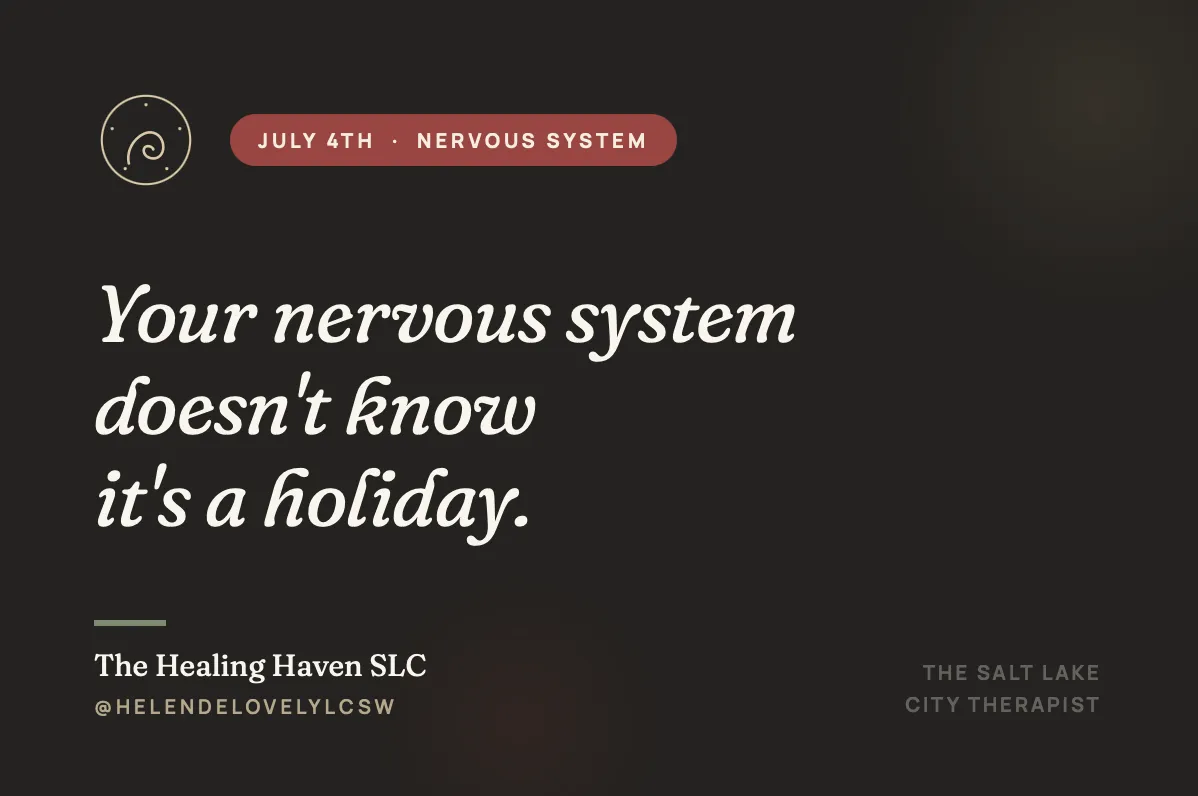
The nervous system doesn't evaluate threats the way the thinking brain does. It doesn't weigh context, reason through probability, or remind itself that it's a holiday weekend and everything is fine. It reacts to sensory information — volume, speed, unpredictability — and it reacts fast.
Fireworks are, objectively, loud, sudden, and unpredictable. Even if you know exactly what they are, your amygdala — the brain's alarm system — registers the input before your cortex has time to contextualize it. The result is a startle response, an uptick in heart rate, tense muscles, shallow breathing, or a low-level sense of dread that doesn't quite match the situation.
For most people, that response passes quickly. For others, it doesn't — or it comes with more intensity than seems proportionate. Both are real, and neither means something is wrong with you.
A few things that make July 4th particularly activating:
Unpredictability— You don't know when the next one is coming. That sustained uncertainty keeps the threat-detection system on alert even between booms.
Duration— Fireworks in most neighborhoods don't happen in one organized show. They happen on and off for days, including illegal displays that go late into the night.
Cumulative load— Heat, crowds, social obligation, disrupted sleep, and alcohol all add to the nervous system's total burden before the first firework goes off.
Trauma, PTSD, and July 4th
For veterans and anyone who has experienced trauma involving loud, sudden sounds — explosions, gunshots, accidents, abuse — fireworks can function as a genuine trauma trigger.
A trauma trigger isn't a figure of speech. It's a sensory cue that the nervous system has associated with threat. When the brain encounters that cue — even in a completely safe context — it can activate the same threat response it learned during the original experience. This can include hypervigilance, a startle response that feels out of proportion, a sense of danger that doesn't match the situation, intrusive memories, emotional flooding, or the urge to escape.
The Veterans Administration has long acknowledged that July 4th can be a significant date for veterans with PTSD. Research consistently shows PTSD rates among post-9/11 combat veterans at 11–20%, and fireworks-related stress during the holiday is documented and real.
It's not a character flaw. It's a nervous system that learned to protect someone — and that protection doesn't know to turn itself off on a holiday.
Neurodivergent Nervous Systems and Sensory Overload
Autistic adults and people with ADHD frequently experience sensory input more intensely than neurotypical people. Sounds that others tune out can register as genuinely painful or overwhelming. The unpredictability of fireworks — the random timing, the variation in intensity, the environmental noise of crowds and music layered underneath — makes them particularly difficult to habituate to.
For autistic adults especially, sensory overload isn't just discomfort. It can produce a full-system shutdown or meltdown: an involuntary response to being overstimulated past a regulatory threshold. This isn't a choice or an overreaction. It's the nervous system hitting its ceiling.
ADHD brains also struggle with the sustained, unpredictable interruption that fireworks represent — particularly at night, when sleep is already affected and the executive-function cost of managing environment and emotion is highest.
If you're neurodivergent and July 4th has always been harder than it seems like it should be, that's not a personal failing. It's information about how your nervous system works.
For more on neurodivergent-affirming care, seeAdult ADHD in Salt Lake City: Signs, Support & Finding a Therapist.
What Actually Helps: Regulation Strategies for the Holiday Weekend
These aren't cures — they're ways to give your nervous system a little more support so the holiday is more manageable.
Before the weekend
Make a plan— Knowing where you'll be, what the noise level is likely to be, and how you'll exit if you need to reduces uncertainty, which reduces the threat load.
Sleep— Start the weekend as rested as possible. A depleted nervous system has a lower threshold for activation.
Reduce the cumulative load— If you know fireworks are hard, don't also commit to a packed social schedule. Give yourself margin.
During
Noise reduction— Earplugs, headphones, or noise-canceling headphones are a legitimate and practical tool, not avoidance. They reduce input to a level the nervous system can process.
Grounding— Bring attention to physical sensation in the present moment: the weight of your feet on the floor, the temperature of air on your skin, an object you can hold. This signals the brainstem that you are here and not in danger.
Orienting— Slowly turn your head and visually scan the room or space. This is a nervous-system technique that communicates safety — predators don't let you casually look around.
Slow exhale— Extending the exhale longer than the inhale activates the parasympathetic nervous system. You don't need a formal practice. Just breathe out slowly.
Give yourself permission to leave— If the environment is activating your nervous system past what you can regulate, leaving is appropriate self-knowledge, not weakness.
After
Rest without judgment— Activation is physiologically depleting. Feeling tired, low, or irritable after a hard sensory experience is normal.
Somatic movement— Gentle movement — a walk, stretching, shaking your limbs — can help discharge the physiological activation that doesn't fully resolve on its own.
For a deeper look at how the body stores and processes stress, seeWhat Is Somatic Therapy? A Salt Lake City Therapist Explains.
When It's More Than a Hard Night
One hard night with fireworks is one thing. But if July 4th consistently produces significant distress — anxiety that starts days before, hypervigilance that doesn't resolve, intrusive memories, a sense of danger that lingers — that pattern is worth exploring with a therapist.
The same is true if you find yourself organizing your life around avoiding triggers, numbing out to get through the holiday, or feeling a level of shame about your response that keeps you from talking about it.
These aren't signs of weakness. They're signs that the nervous system developed a response pattern that deserves real, skilled attention — not just willpower.
EMDR is one of the most well-researched approaches for trauma and PTSD. For more:What an EMDR Session Actually Feels Like.
Support at The Healing Haven SLC
Helen De-Lovely, LCSW works with adults navigating trauma, PTSD, anxiety, nervous-system dysregulation, ADHD, autism, and the specific challenges that come with being a sensitive or neurodivergent person in a world that isn't always designed for you. Sessions are available in person at 250 E 200 S, Suite 1521, Salt Lake City, UT 84111, and online for clients across Utah.
Schedule your free 15-minute consult → helendelovely.com/consult
Session Rates
Standard rate: $189/session
Member rate: $123/session
Healing Group Membership: $29/month — community access, group program, and preferred session rates
The practice is out-of-network with commercial insurance plans. Superbills are provided for potential reimbursement. Utah Medicaid is accepted directly after benefits verification.
Explore membership → helendelovely.com/membership
Frequently Asked Questions
Is it normal to feel anxious around fireworks even if I haven't experienced trauma?
Yes. Fireworks are loud, sudden, and unpredictable — all things the nervous system is primed to respond to. Some people have a more sensitive threat-detection system by nature; others have accumulated enough stress that the threshold for activation is simply lower than usual. Neither requires a trauma history.
My anxiety about fireworks feels embarrassing. Is that common?
Very. There's a cultural expectation that July 4th should be enjoyable, which makes it harder to name when it isn't. Many people feel shame about a response they have no control over. You're not alone, and it's not embarrassing — it's physiology.
Can therapy actually help with this?
Yes. For ongoing distress — not just a hard night but a pattern that affects your life — therapy can help. EMDR is particularly effective for trauma-related reactivity. Somatic approaches help the nervous system build more regulation capacity over time. A good therapist won't tell you to just think more positively about fireworks.
I'm a veteran and July 4th is really hard for me. Where do I start?
You can start with a free 15-minute consult athelendelovely.com/consult. Helen works with trauma and PTSD using EMDR and somatic approaches that don't require extensive verbal processing of your history if that's not where you are right now.
What about children and pets?
The same nervous-system principles apply. For children: normalize their experience, don't insist they enjoy it, and offer the same grounding support you'd give yourself. For pets: consult your vet — anxiety medication and sound-dampening are both options.
Ask a Therapist
"If July 4th is hard for you — if the fireworks feel like more than just noise, if your body goes somewhere you don't want it to go — I want you to know that's a real thing, not an overreaction. The nervous system doesn't know it's a holiday. And if that pattern shows up every year and it's affecting you, you deserve actual support for it, not just a better pair of earplugs."
— Helen De-Lovely, LCSW
Disclaimer: This post is for educational purposes only and does not constitute medical or mental health advice. It is not a substitute for working with a licensed mental health professional. If you are in crisis or need immediate support, please contact the 988 Suicide & Crisis Lifeline by calling or texting 988. For emergencies, call 911. Veterans in crisis can also contact the Veterans Crisis Line: call 988 and press 1, text 838255, or chat at VeteransCrisisLine.net.